Model Codes Over Color Names in Global Store Options
Model Codes Over Color Names in Global Store Options
As retail chains expand internationally, the same product color may appear under different marketing names, translations, or abbreviations. A shade sold as “Ocean Mist” in one country may use another name elsewhere, even though both listings refer to the same product variation.
The practical solution is not to replace color names entirely. Retail systems usually retain customer-facing names while assigning every sellable variation a stable identifier. A color name, SKU, internal variant ID, GS1 color code, and GTIN serve different purposes and should not be treated as interchangeable.
For example, an e-commerce platform may display “Ocean Mist” to the shopper while using a variant-specific SKU and barcode for inventory and fulfillment. Shopify defines a product variant as a specific combination of options such as size and color. GS1 also states that each color, size, or color-size variation requires its own GTIN when it is sold as a distinct trade item.
Why Global Retail Systems Must Use Model Codes Over Text-Based Color Names
Text-only color management becomes unreliable when names are entered differently across systems. “Dark Blue,” “dark-blue,” a translated equivalent, and a brand name such as “Midnight Tide” may refer to the same variation—or to several different shades.
Language and Translation Barriers: Localized color names help customers understand their options, but every translated value should point to the same underlying variant record. Warehouse staff should identify the item through a SKU, barcode, or system-generated variant ID rather than interpret a marketing phrase.
Variation Across Product Generations: A brand may reuse a color name even when the finish, material, or shade changes between product generations. A stable variant identifier helps distinguish the older product from a newer version with a similar description.
Data Conflicts Between Software Platforms: E-commerce platforms commonly store color as an option value while maintaining separate fields for SKU, barcode, inventory, price, and media. Shopify’s product model, for example, connects these operational fields to individual variants.
Structured identifiers reduce ambiguity, but they do not eliminate every error. Incorrect mappings, duplicate records, reused barcodes, outdated marketplace data, and mislabeled packages can still result in the wrong item being shipped.
Direct Comparison: Standardized Model Codes vs. Freeform Color Names
| Evaluation Criteria | Freeform Color Names | Standardized Model Codes |
|---|---|---|
| Mispick Rate | More vulnerable to confusion when similar names or translations are used without a unique scannable identifier | Can reduce wrong-variant picks when codes are unique, correctly mapped, and scanned, but cannot reduce errors to zero |
| Omnichannel Syncing | Requires repeated normalization of spelling, language, and formatting | Supports more reliable matching when every system refers to the same variant record |
| Return Processing Costs | Makes identification harder when the order and package use different color descriptions | Helps match the returned item to the original variation but does not prevent returns caused by damage, fit, or customer preference |
| Market Expansion Velocity | Requires localized display names and channel-specific formatting | Allows core identifiers to remain stable while customer-facing names are translated |

GS1 US / NRF Color Codes – The Gold Standard in Global Product Attribute Management
The GS1 US Color Codes are relevant to apparel and general merchandise, particularly in the United States, but they are not a universal worldwide color specification.
GS1 US acquired the former National Retail Federation Color and Size Code tables in 2020. The system was originally developed for the purchasing processes used by major U.S. retailers and now provides a shared language for exchanging color and size information alongside UPC-based product data.
Some ranges in the original article were incorrect. The official tables use:
- 000–019 for black
- 020–099 for grey
- 100–199 for white
- 400–499 for blue
Other groups cover beige, brown, green, orange, pink, purple, red, yellow, and miscellaneous assortments.
These numbers classify colors; they do not function like universal RGB, HEX, or Pantone values. GS1 US allows the same color code to represent a different shade under another Product ID. Vendors must use the codes consistently within a particular style or product line. A code such as 401 therefore cannot be described as one exact shade that every brand must call “Ocean Mist” or “Navy Blue.”
GS1 US also states that color and size codes are not part of the UPC. Each unique style, color, and size combination should have its own product identifier, while the color classification remains a separate data attribute.
The Strategic Balance: Model Codes for Internal Operations, Color Names for Customers
Retailers need both understandable product names and reliable operational identifiers.
Front-End User Experience (UX Layer): The storefront can display a branded color name, translated description, swatch, and product photographs. The visible text may change by language or marketing campaign without changing the underlying item.
Back-End Data Engine (Operational Layer): The selected option should resolve to a specific product variant with its own SKU or internal ID and, where required, a barcode or GTIN. Inventory, fulfillment, pricing, returns, and variant-specific media can then reference that record.
The back end should not rely on a color code alone. A broad blue classification does not identify which blue shirt, phone case, or shoe the customer ordered. Fulfillment requires the complete product and variant identity.
A 4-Step Migration Guide to Model Codes for Retail Chains
Step 1: Audit and Eliminate Confusing Color Attributes
Export the current product catalog and identify duplicate SKUs, reused identifiers, inconsistent spelling, untranslated values, and color names attached to materially different products.
Separate the marketing name from the normalized color family and the unique variant record. “Ocean Mist” may remain the display name, while “Blue” is stored as the general color family and a separate SKU identifies the exact item.
When collecting model numbers or variation data from an overseas storefront, first verify that the source is controlled by the brand. The checks in How to Distinguish an Overseas Brand’s Official Store From a Shopping Site That Copies Its Name and Design can prevent a copied storefront from becoming the source of incorrect catalog data.
Step 2: Establish a Standardized Identification Dictionary
Create a central dictionary that defines the internal variant ID, SKU rules, GTIN field, normalized color family, customer-facing color name, translations, and product status.
Use GS1 US color codes when they match the company’s sector and trading-partner requirements. Do not assume that every country, marketplace, or product category uses the former NRF system.
An internal code can also work when it is unique, documented, stable, and clearly distinguished from a GS1 identifier.
Step 3: Synchronize Data Engine Integrations
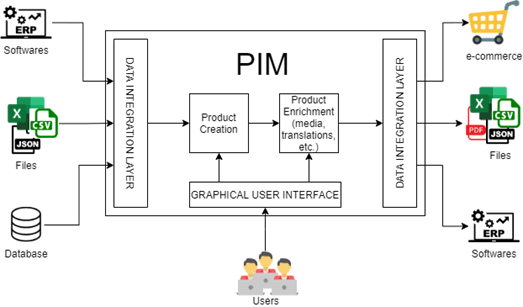
Decide which system owns each field. The PIM may control product descriptions and translations, while the ERP manages commercial records and the WMS tracks stock locations.
Map the same variant identifier through every integration instead of matching products by color text alone. Test updates carefully because an external marketplace may create a duplicate variation when it cannot match the incoming identifier.
Step 4: Validate Omnichannel Display and Logistics Workflows
Place test orders through the website, mobile app, marketplaces, and physical POS. Verify the selected swatch, SKU, barcode, picking record, packing information, dispatch confirmation, and return record.
A shipping label does not always need to display the full model or color code. The requirement is that staff and connected systems can retrieve the exact ordered variant without interpreting an ambiguous marketing name.
Common Pitfalls in Model Code Implementation and How to Avoid Them
Hardcoding Color Codes Directly into Master UPC Barcodes
The Pitfall: Treating a UPC or GTIN as though its digits should visibly encode a color family. GS1 US specifically states that its color and size codes should not be incorporated directly into assigned UPC numbers.
The Solution: Assign a unique GTIN to each separately sold color and size variation. Store the color code, color description, SKU, and other attributes in the linked product record. The same UPC should not be used for several different sellable colors.
Creating Non-Scalable Random Numbers
The Pitfall: Assigning short numbers without ownership rules, uniqueness checks, documentation, or a policy for discontinued records.
The Solution: Use identifiers that remain unique and stable. Keep descriptions and classifications in separate fields rather than forcing every product characteristic into the identifier itself.
Logical color-family ranges may help with analysis, but heavily encoded identifiers become difficult to maintain when products or classification rules change.
Changing Model Codes During Temporary Stockouts
The Pitfall: Creating a new identity simply because an unchanged variation temporarily went out of stock. This can separate new sales from historical orders and complicate return processing.
The Solution: Preserve the existing identifier when the same trade item returns. Assign a new GTIN or variant record when the product is genuinely new or when a change requires customers or supply-chain partners to distinguish it from the previous item. GS1’s GTIN Management Standard treats each new style, color, or size variation as a separately identified product.
Color names and model codes are not competing choices. Color names help shoppers understand and compare options, while structured identifiers allow retailers to order, scan, stock, ship, and process the exact variation selected. A reliable international catalog links every localized color name to a unique product variant, SKU, and, where required, GTIN. GS1 US color codes can support classification in apparel and general merchandise, but they are not universal shade values and should not be embedded directly into UPC numbers. The strongest system uses one stable identity for every sellable variation, separate fields for color classification and marketing language, and verified mappings across every sales and logistics channel.