Differences in Editing and Included Content Across Standard, Complete, Collector’s, and Omnibus Manga Editions
When collecting or reading Japanese comics (manga), readers are often faced with multiple edition formats: from standard single volumes and multi-volume omnibuses to complete editions (Kanzenban) and premium collector’s editions (Aizoban). The price gap between these formats reflects not only the outer cover materials but also significant differences in print quality, reading experience, and internal editorial content.
Understanding the core differences between each format will help you optimize your budget, save shelf space, and select the precise edition that meets your specific reading preferences.
Overview of 4 Popular Manga Formats on the Market
1. Standard Tankobon Edition
This is the most common format on the market, published as individual single volumes (typically ranging from 180 to 220 pages). Each Tankobon volume compiles chapters previously serialized in weekly or monthly manga magazines.
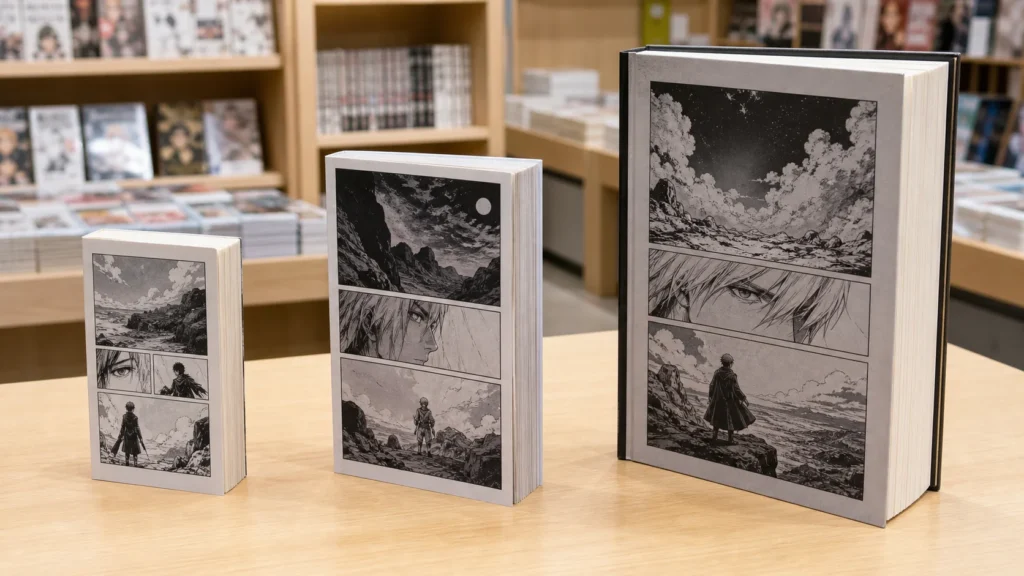
- Characteristics: Standard small trim size (approximately 11.5 x 17.5 cm), paperback binding featuring a dust jacket.
- Pros: Lowest cost per single volume, lightweight, and highly portable for reading on the go.
- Cons: Thinner paper stock prone to yellowing over time, with original magazine color pages converted to grayscale.
2. Omnibus Edition (2-in-1, 3-in-1)
An Omnibus combines the content of 2 or 3 standard Tankobon volumes into a single, thicker book.
- Characteristics: Double or triple the thickness of a standard volume, wider spine, and a page count usually ranging from 400 to 600 pages.
- Pros: Lower average cost per chapter compared to purchasing individual Tankobon volumes separately. Saves horizontal shelf space.
- Cons: To keep total thickness manageable, publishers often use thinner paper (leading to noticeable show-through/bleed-through). Thick paperback binding makes the book harder to open flat, frequently causing artwork to be lost in the spine (gutter loss).
3. Complete Edition (Kanzenban)
Kanzenban (meaning “Perfect/Complete Edition”) is engineered for completed manga series with large, dedicated fanbases.
- Characteristics: Larger trim size than standard releases (typically A5 format, 15 x 21 cm), high-grammage white paper stock, and high-contrast ink printing.
- Pros: Restores 100% of the original color pages from magazine serialization, restores chapter cover pages, and includes author commentary.
- Cons: Significantly higher retail price than standard volumes, with a reduced total volume count for the overall series (for example, a 36-volume Tankobon series may be consolidated into 24 Kanzenban volumes).
4. Collector’s Edition (Aizoban / Hardcover)
Aizoban represents the most premium format, emphasizing long-term archival preservation and display aesthetic.
- Characteristics: Bound in hardcover, often featuring foil stamping, slipcases, or exclusive bonus physical items such as artbooks or postcards.
- Pros: Durable Smyth-sewn binding allows the book to lay completely flat at 180 degrees without damaging the spine. Premium, thick paper stock offers maximum resistance to yellowing.
- Cons: Very high price point, heavy weight, and less comfortable to hold for extended handheld reading sessions.
Overview Comparison of Manga Formats
| Comparison Criteria | Standard (Tankobon) | Omnibus (2-in-1 / 3-in-1) | Complete (Kanzenban) | Collector’s (Aizoban) |
|---|---|---|---|---|
| Trim Size | Small (11.5 x 17.5 cm) | Small to Medium | Large (A5 – 15 x 21 cm) | Large (A5 or larger) |
| Cover Type | Paperback + Dust Jacket | Paperback | Premium Paperback / Flaps | Hardcover |
| Paper Quality | Thin newsprint/pulp, turns yellow | Thin paper stock (directory grade) | Thick, smooth off-white paper | Premium art paper |
| Color Pages | Converted to Grayscale | Converted to Grayscale | 100% Restored Original Color | Restored Color + Bonus Spreads |
| Translation & Ink | First release translation | Preserved or minor tweaks | Revised translation, redrawn lettering | Newly edited/revised translation |
| Price / Volume | Low ($10 – $13) | Moderate ($15 – $20) | High ($18 – $25) | Very High ($30 – $60+) |
Core Differences in Editing and Content
Restored Original Color Pages
When creating chapters for weekly magazines like Weekly Shonen Jump, manga artists frequently draw color pages (Color Spreads) for milestone chapters. However, to minimize printing costs for standard Tankobon releases, publishers convert these color pages into grayscale. This process flattens the contrast and obscures the artist’s original color nuances.
Complete (Kanzenban) and Collector’s Editions commit to restoring 100% of these color pages exactly as they appeared in the original magazine run. Conversely, standard Omnibus releases maintain grayscale printing unless explicitly labeled “Includes Color Pages.”
Translation Revisions, Lettering, and Censorship
Many classic manga series suffered from outdated, stiff translations or heavy censorship regarding language and sensitive imagery in their initial Tankobon runs.
- Translation Retranslation/Revision: Kanzenban and Collector’s Editions frequently feature fully retranslated or heavily revised text, correcting character names, honorifics, and retaining original Japanese cultural terminology.
- Sound Effects and Lettering (SFX): On larger page formats, dialogue bubbles and sound effect lettering are reassembled and repositioned to fit panel boundaries without obscuring the artist’s underlying linework.
Bonus Content, Side Stories, and the Omission of Extra Pages
An important editorial detail often overlooked by readers concerns the bonus material placed at the end of single volumes. Standard Tankobon volumes often include character sketch pages, gag strips, or author Q&A mail corners.
When condensing 3 volumes into 1 Omnibus, publishers sometimes omit these end-of-volume bonus pages to optimize page counts and lower production costs. In contrast, Complete and Collector’s Editions compile all side-story chapters (One-shots), exclusive creator interviews, and previously uncollected magazine cover art into unified sections.
Differences in Paper Quality and Page Format
Page size directly influences visual appreciation. Manga artwork relies heavily on intricate line shading (screentone) and detailed background rendering.
- Standard trim sizes cause fine details to shrink, occasionally resulting in visual clutter.
- The A5 format used in Complete and Collector’s Editions scales the artwork closer to the artist’s original manuscript drawings, making elaborate action sequences and architectural backgrounds far clearer and more impactful.
Regarding binding durability, overly thick paperback Omnibus editions are prone to spine creases after a few reading sessions. Meanwhile, collector-tier editions utilize Smyth-sewn binding that allows pages to lay flat on a table without putting structural strain on the spine.
4-Step Guide to Choosing the Right Manga Edition
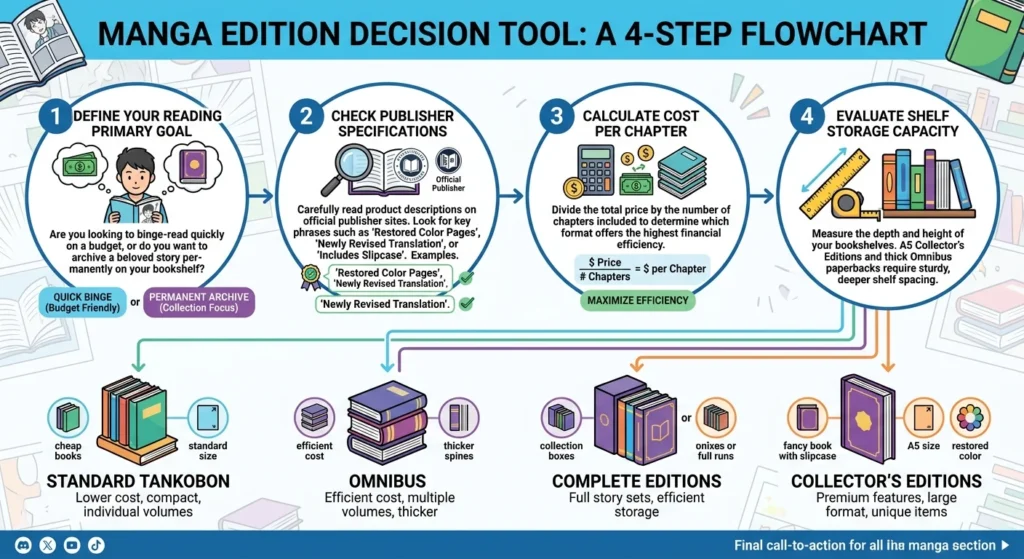
To make an informed purchase decision, follow this 4-step evaluation workflow:
- Define your reading primary goal: Are you looking to binge-read quickly on a budget, or do you want to archive a beloved story permanently on your bookshelf?
- Check publisher specifications: Carefully read product descriptions on official publisher sites. Look for key phrases such as “Restored Color Pages”, “Newly Revised Translation”, or “Includes Slipcase”.
- Calculate Cost per Chapter: Divide the total price by the number of chapters included to determine which format offers the highest financial efficiency.
- Evaluate shelf storage capacity: Measure the depth and height of your bookshelves. A5 Collector’s Editions and thick Omnibus paperbacks require sturdy, deeper shelf spacing.
Frequently Asked Questions (FAQ)
Is content cut from 3-in-1 Omnibus editions compared to single Tankobon volumes?
The main story chapters remain complete and intact. However, budget-oriented Omnibus editions may cut end-of-volume bonus material—such as sketch pages, author notes, or short gag strips—to reduce overall page counts.
How does a Kanzenban (Complete Edition) differ from an Aizoban (Collector’s Edition)?
Kanzenban focuses primarily on providing the ultimate reading presentation (larger trim size, restored color pages, complete chapter inclusion). Aizoban goes a step further by upgrading physical durability—adding hardcovers, slipcases, artbooks, or exclusive physical memorabilia.
Do all Collector’s Editions feature new translations?
Not necessarily. Some Collector’s Editions upgrade physical materials (such as paper weight and hardcover binding) while retaining the original translation and page layout files from earlier Tankobon releases. Check for explicit “New Translation” tags in official publisher listings.
Why are magazine color pages converted to black-and-white in Standard editions?
Color printing requires specialized paper stock and separate multi-pass color separation processes, which substantially increase production costs. To keep standard Tankobon volumes affordable for everyday readers, publishers convert color magazine pages to grayscale for mass production.